
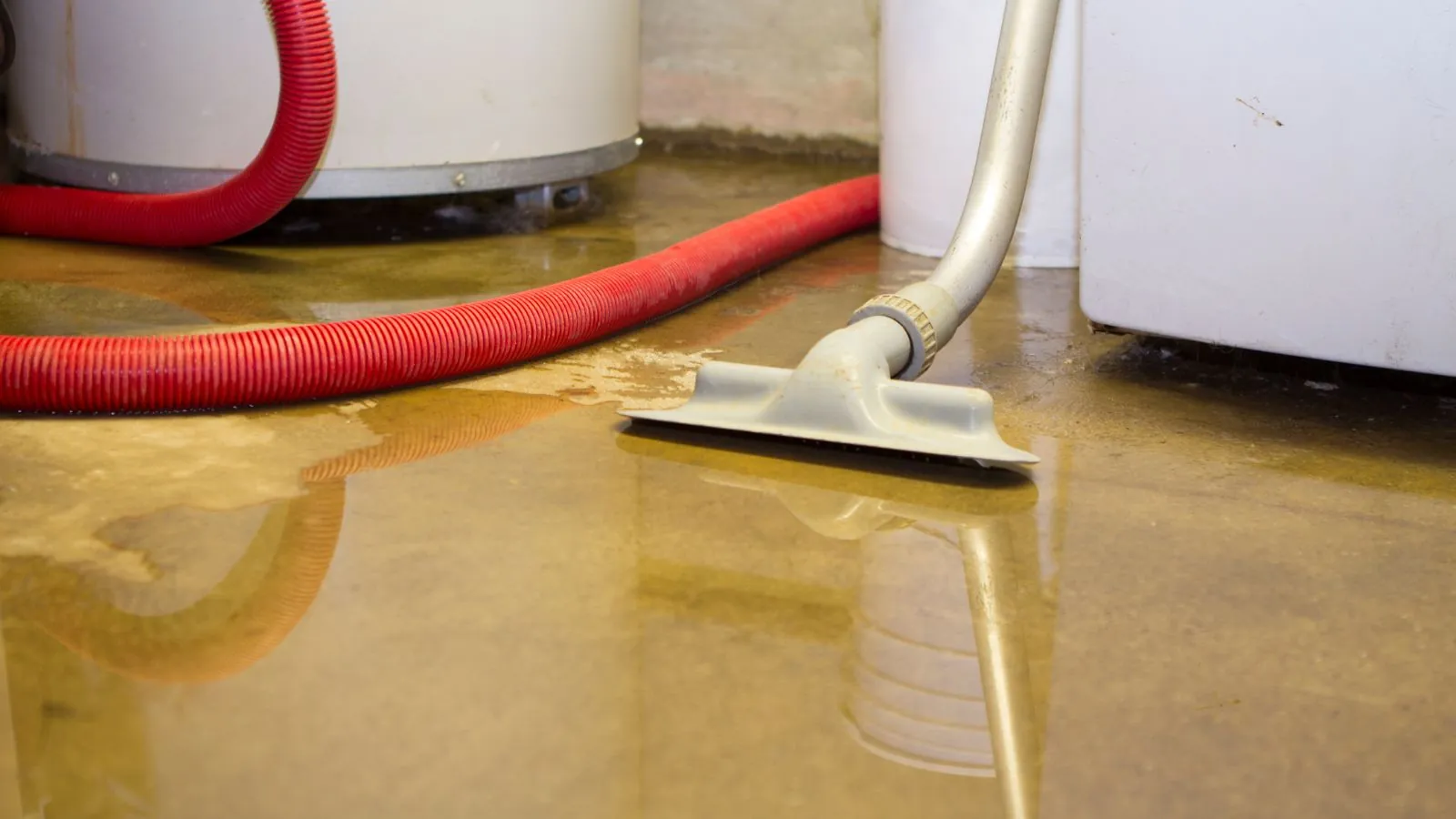
Water in a basement is an emergency when it is rising or has reached outlets, and the line is answered 24/7. Basement water damage cleanup in Oak Creek, WI is the removal of water from a below-grade room and the drying or removal of what it soaked. Do not step into standing water with the power on. From a dry spot, move boxes and valuables up the stairs and check whether the sump pump is running.
Basements collect water because they are the bottom of the house. Everything that leaks above ends up there, and the ground outside presses in from every side.
Basement water emergency: check these three things
- From the top of the stairs
- Is the water near outlets, the furnace or the electrical panel? If yes, do not go down. Call the electric utility.
- Is the sump pump humming, silent or tripped? A silent pump in a storm is often a power or float problem.
- Is the water clear, cloudy or smelly? Dark water from the floor drain is a sewer backup and needs different handling.
For that last case, go to sewage backup cleanup and keep everyone upstairs.
The three ways basements get wet here
First, sump pump failure. The pit fills during heavy rain, the pump does not start, and water spreads from that corner. Second, seepage through walls and the joint where the floor meets the wall, after the ground is saturated. Third, sewer backup through the floor drain when regional sewers are overloaded.
Oak Creek has seen all three. The city's flood mitigation plan puts municipal property damage from the storm of July 2, 2000 at about $850,000, and that figure does not count private basements. A battery backup on the sump pump is the single most useful upgrade for a home that has taken water before.
Finished basements
A finished basement turns a wet floor into a construction project. Carpet and pad, the bottom of framed walls, drywall, insulation and built-in cabinets all sit at floor level. Wood framing in contact with a wet slab wicks water upward.
We extract, then read every wall base with a moisture meter. With clean water caught early, we can often dry walls through small openings behind the baseboard. With pump or seepage water, or after a long soak, the bottom section of drywall and insulation is removed so the framing can dry.
Carpet decisions are explained on our carpet water damage page.
Drying a room that is below ground
Basements dry slowly. Concrete holds water, there is little natural airflow and the surrounding soil stays damp. We set air movers along the walls and LGR dehumidifiers sized to the room, close it off from the upstairs and log readings until the framing and slab are normal.
Stored contents are a big part of the job. Cardboard boxes act like sponges and go first. Plastic bins, metal shelving and solid furniture are usually fine once cleaned. See structural drying for how the readings work.
We clean up basements across Oak Creek and in Hales Corners.
What decides the cost of basement cleanup
| Cost factor | Why it matters on this job |
|---|---|
| Finished or unfinished | Bare concrete is the simplest case. Finished rooms add walls, flooring and trim. |
| Water source | Clean supply water, sump or seepage water, and sewage are three different scopes. |
| Depth | A film is vacuumed. Inches need pumps and more drying time. |
| Contents | How much is stored down there and how much of it got wet. |
| Rebuild | Drywall, insulation, flooring and trim for finished areas. |
Wisconsin's insurance office points out that sump pump overflow and sewer backup are not part of a standard homeowners policy and need a special endorsement, while seepage through a foundation generally needs flood coverage. Check your policy or ask your insurer.
Want your real number? Call (833) 521-1033. We serve Oak Creek, Franklin, Greendale, Hales Corners, Franksville and Muskego. Work is done to the ANSI/IICRC S500 standard.