
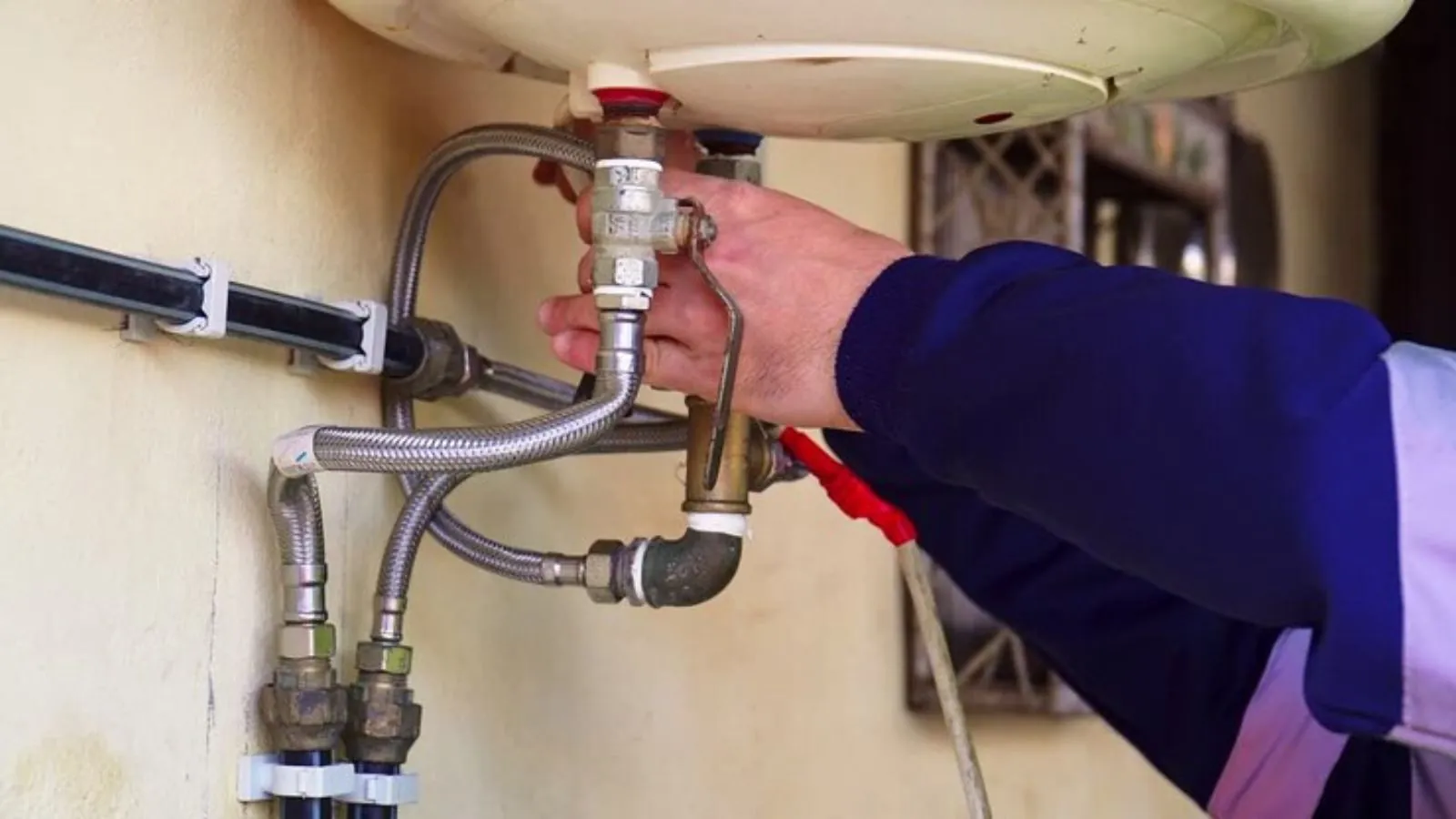
A failed water heater is an emergency because it never empties: the cold supply keeps feeding the leak. Our line is answered 24/7 for water heater leak cleanup in Oak Creek, WI. Before anything else, close the cold water valve above the tank, switch the gas control to off or flip the breaker for an electric unit, and keep clear of hot water on the floor.
A standard residential tank holds 40 to 50 gallons. If the valve stays open, the house supply adds to that every minute. The water spreads under walls into whatever is next to the utility room.
Water heater emergency: shut it down safely
- Three shut-offs
- Water: the valve on the cold pipe entering the top of the tank. If it will not turn, use the main valve.
- Energy: gas control knob to off, or the breaker for an electric heater. Do not touch the breaker if you are standing in water.
- Drain: only if you can reach the drain valve safely and have a hose to a floor drain.
If you smell gas, leave the house and call the gas utility or 911 before you call anyone else.
Slow leak or sudden failure
Tanks fail two ways. A slow weep from a fitting or the relief valve leaves a rust ring and a damp patch for weeks. A corroded tank bottom can open all at once. Both soak the floor, but the slow kind has more time to get under walls.
The Oak Creek Water and Sewer Utility lists water heaters first among the appliances that leak in a home. Its meter test is worth knowing: with every tap off, watch the small red dial on the meter. If it moves, water is going somewhere it should not.
What we check around the heater
Heaters sit in utility rooms, closets and basements, next to furnaces, framed walls and stored boxes. We extract the standing water, then read the bottom of every wall the water reached with a moisture meter. Drywall and wood framing wick water upward, so the wet line is often higher than the flood line.
If the tank sits on a finished floor, the flooring next door needs a look too. Carpet and pad are covered on our carpet water damage page, and wood on hardwood floor repair.
Air movers and dehumidifiers then run until readings are normal. Furnace bases and stored items are moved or raised so air reaches the slab.
Is the water clean?
Usually, at first. Tank water is treated city water, which the standard treats as Category 1. Rusty sediment from the tank bottom stains but is not a health concern. The category changes if the water ran across a dirty floor drain or sat for days.
That is one reason to move quickly. Clean water gives more options to dry materials in place. For the full picture of how pumps and vacuums are used, see water extraction. We clean up heater leaks across Oak Creek and in Muskego.
What decides the cost of a water heater leak cleanup
| Cost factor | Why it matters on this job |
|---|---|
| Where the heater sits | A bare concrete basement is simple. A closet on a finished main floor affects several rooms. |
| How long it ran | A supply left open for hours puts far more than one tank on the floor. |
| Walls and flooring | Framed walls, carpet and wood around the heater add drying or replacement. |
| Contents | Stored boxes and furniture have to be moved, dried or discarded. |
| Drying days | Set by the readings in the slab, plates and drywall. |
A tank that fails suddenly is often a covered loss, though the heater itself usually is not. Slow leaks ignored over time are often excluded. Ask your insurer how your policy treats each. We photograph the tank, the floor and the wet walls for your file.
Want your real number? Call (833) 521-1033. We serve Oak Creek, Franklin, Greendale, Hales Corners, Franksville and Muskego. Work is done to the ANSI/IICRC S500 standard.