
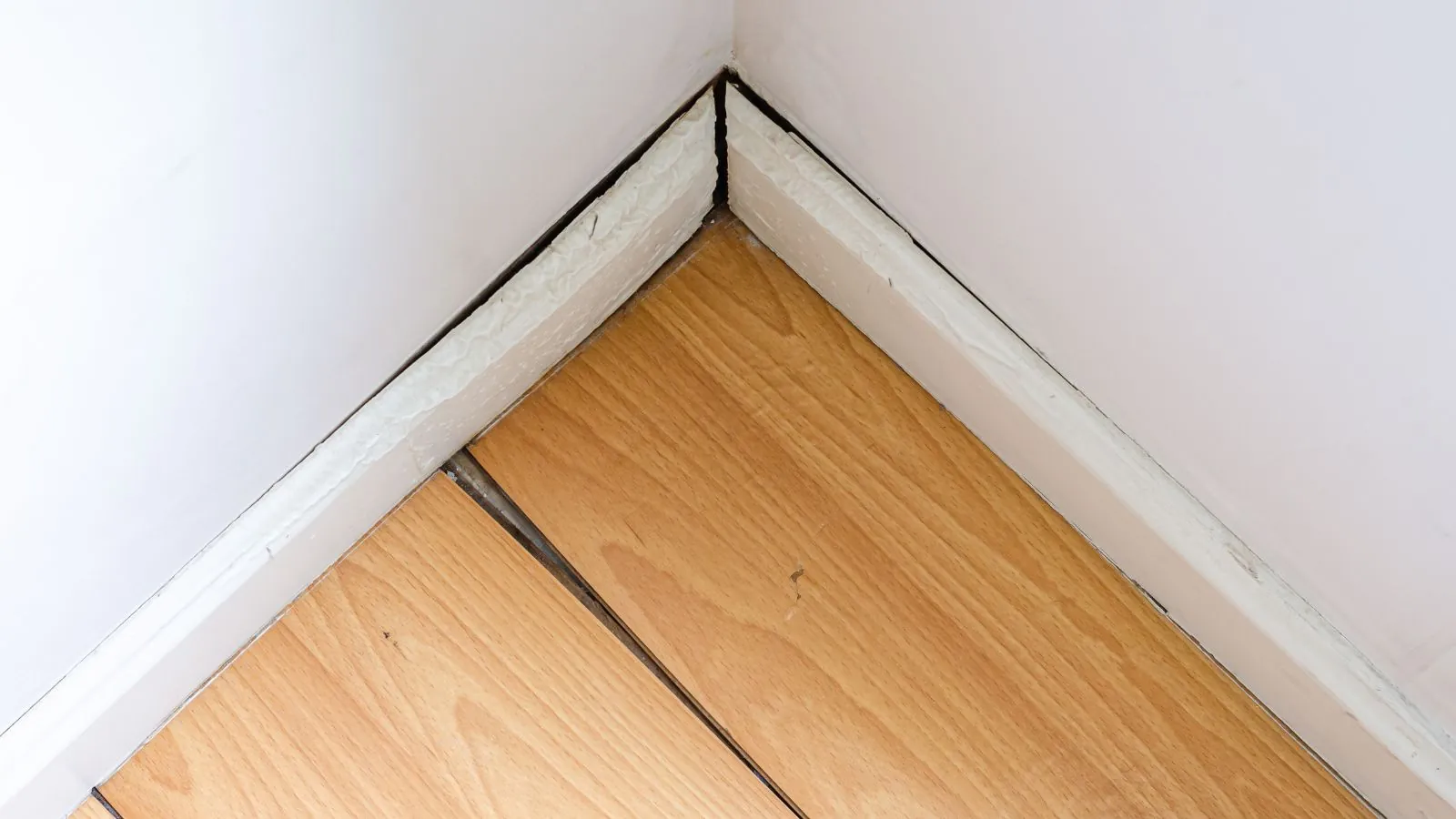
Hardwood floor water damage repair in Oak Creek, WI means drying wet wood flooring and the subfloor under it, then repairing or replacing boards that did not recover. Hardwood floor water damage is the swelling, cupping or buckling that happens when boards absorb water faster on one face than the other.
Wood is forgiving if you move quickly and patient if you measure. The mistakes that ruin floors are waiting a week to start, and sanding before the wood is dry.
Cupping, crowning and buckling
| What you see | What is happening | Outlook |
|---|---|---|
| Cupping: board edges higher than the center | The underside is wetter than the top | Often recovers with drying, if started early |
| Crowning: center higher than the edges | The top was wet, or a cupped floor was sanded too soon | May need refinishing after it dries |
| Buckling: boards lifted off the subfloor | Severe swelling with nowhere to go | Affected boards are usually replaced |
| Dark stains along the seams | Water sat long enough to discolor the wood | Sanding may not remove it |
Why Wisconsin wood floors move anyway
Wood gains and loses moisture with the seasons. In a Milwaukee-area home it swells a little in humid summers and shrinks through the heating season, when January lows average 17.2 degrees and indoor air is dry. Small seasonal gaps are normal.
That matters after a leak because the target is not zero moisture. It is the reading from unaffected boards in the same house at that time of year. Drying past that point causes cracks and gaps of its own.
How wood floors are dried
First, standing water is extracted and the finish is checked. Then a moisture meter reads the boards and, through them, the subfloor. Most of the water in a wet floor is underneath, in the subfloor and the space between.
Drying mats are sealed to the floor and connected to a vacuum system that draws air and moisture up through the seams. Dehumidifiers dry the room, and where there is a basement or crawl space below, air is moved across the underside as well. Readings are logged for days.
This is slow, careful work compared with drying drywall. The general method is described on our structural drying page.
Repair options and honest trade-offs
If the floor returns to flat, it may need nothing more, or a sand and refinish once the readings have been stable. If some boards buckled or stained, they can be replaced and the floor refinished to blend. Weaving new boards into an old floor works well but is rarely invisible until the whole room is refinished.
Engineered wood and laminate are different. Engineered boards can delaminate, and laminate swells at the edges and stays swollen. Both are usually replaced where they got wet.
The source matters too. A dishwasher or fridge line is covered on our appliance leak page, and wet walls beside the floor under wall and drywall repair. We repair wood floors across Oak Creek and in Muskego.
What decides the cost of hardwood floor repair
| Cost factor | Why it matters on this job |
|---|---|
| How long it was wet | Hours give the floor a chance. Days usually mean replacement. |
| Floor type | Solid hardwood can be dried and refinished. Engineered and laminate are more often replaced. |
| Area | The square footage that reads wet, including under cabinets and thresholds. |
| Drying time | Wood drying takes more equipment days than other materials. |
| Refinishing | Whether one room or connected rooms need sanding to match. |
Water damage to floors from a sudden leak is often covered, and policies vary on refinishing adjoining rooms to match. Ask your insurer. We record moisture readings across the floor so the affected area is clear.
Want your real number? Call (833) 521-1033. We serve Oak Creek, Franklin, Greendale, Hales Corners, Franksville and Muskego. Work is done to the ANSI/IICRC S500 standard.