
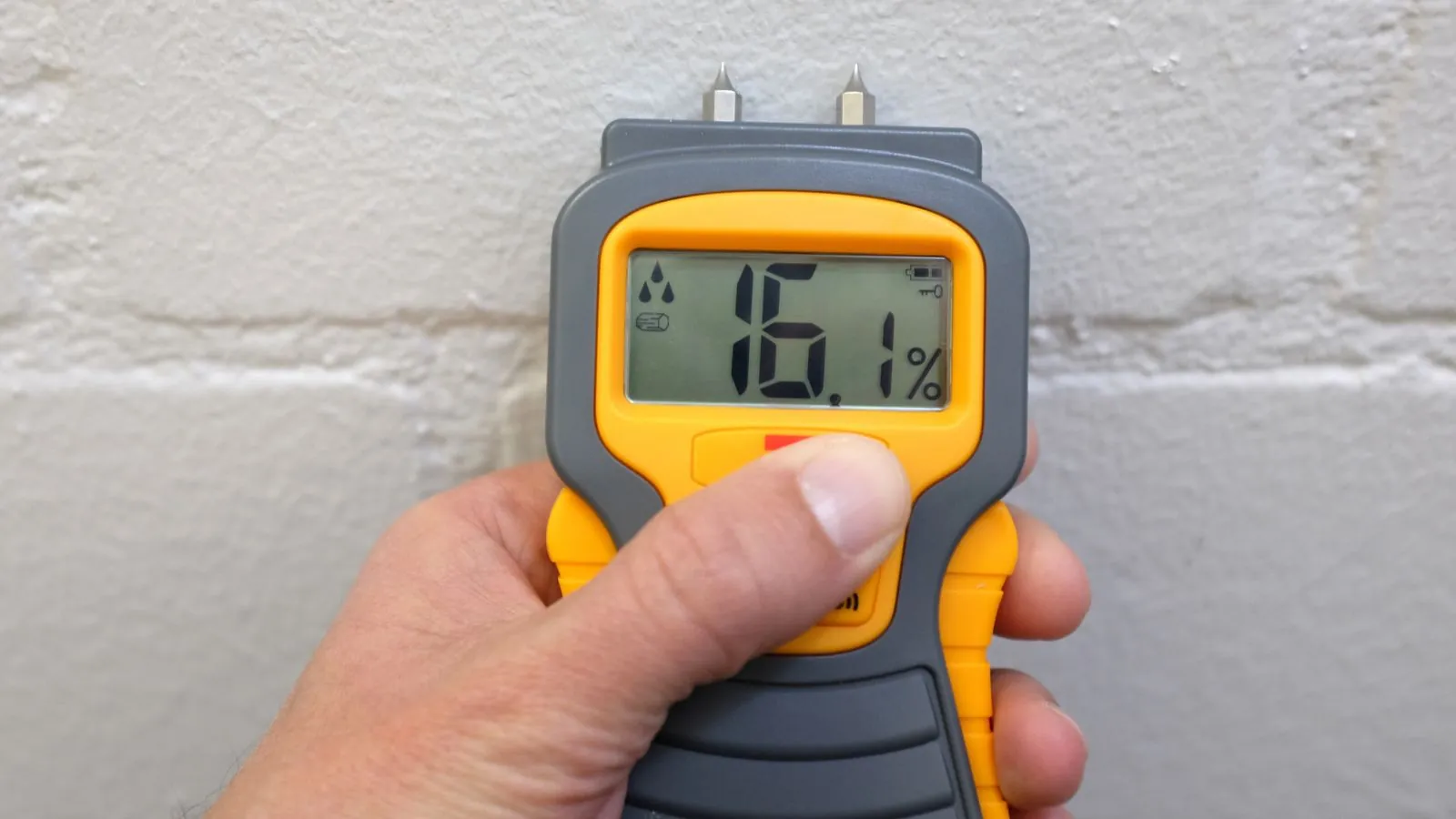
Structural drying and dehumidification in Oak Creek, WI is the controlled removal of moisture from framing, subfloors, drywall and concrete after the liquid water is gone. Structural drying uses moving air to lift moisture out of materials and dehumidifiers to take it out of the air, with meter readings to prove when the job is finished.
The leak is fixed, so why does it still smell damp?
Because the water you could see was only part of it. Drywall, wood and concrete absorb water and let it go slowly. A room can look and feel dry while the wall cavity, the carpet pad or the subfloor is still wet. A musty smell a week or two after a leak is the usual sign.
The trade name for fixing that is structural drying. If you have a wet wall, a floor that will not dry out or a smell that came after a leak, this is the service you are looking for.
What water mitigation means
You will hear this term from insurers and contractors. Water mitigation is everything done to stop a water loss from getting worse: stopping the source, extracting water, removing materials that cannot be saved, and drying the structure. It is the emergency stage.
Restoration is the rebuild that follows. Drying is the bridge between the two, and it is the part most often cut short. Mitigation that ends when the floor looks dry leaves the expensive problems in place.
The equipment, in plain words
| Tool | What it does |
|---|---|
| Moisture meter | Reads the water content of drywall, wood and concrete. Pin types read inside the material. |
| Thermal imaging camera | Shows cooler, wet areas behind finished surfaces so nothing is opened blindly. |
| Air mover | Pushes a fast sheet of air across wet surfaces to speed evaporation. |
| LGR dehumidifier | Removes moisture from the air even when the air is already fairly dry. |
| Hygrometer | Measures temperature and humidity so the drying conditions can be tracked. |
Air movers alone only move the problem into the air. Without dehumidifiers the moisture settles into other materials. The two always work together.
Moisture mapping and the drying log
On day one a technician maps the wet area and records readings at marked points. Readings are also taken from the same material in a dry part of the building. That dry number is the target.
The points are rechecked through the job and equipment is moved as areas dry. You can see the log. Drying ends when the wet points match the dry standard, which is the method set out in ANSI/IICRC S500.
The EPA's advice is to dry water-damaged areas in the first 24 to 48 hours to prevent mold, and to hold indoor humidity under 60 percent. In a Milwaukee summer, when June is the wettest month of the year, open windows work against that. The space is closed up so the equipment controls the air.
What can be dried in place
With clean water and a quick start, a lot. Drywall can be dried through small holes behind the baseboard. Carpet can be dried over new pad. Hardwood can sometimes be pulled back flat with drying mats.
Some things cannot. Wet insulation, swollen particleboard and anything soaked by contaminated water come out. The pages on walls and drywall, carpet and hardwood floors explain each material. We dry structures across Oak Creek and in Greendale.
What decides the cost of structural drying
| Cost factor | Why it matters on this job |
|---|---|
| Wet area | The square footage of floor, wall and ceiling that reads wet. |
| Materials | Drywall dries in days. Hardwood, plaster and concrete take longer. |
| Equipment count | The number of air movers and dehumidifiers the space needs. |
| Drying days | Set by the readings, not a fixed schedule. |
| Demolition | Any material that has to be removed so the structure can dry. |
Drying is normally part of a covered water loss when the cause itself is covered. Coverage depends on the policy and the cause, so ask your insurer. The drying log, with dated readings, is the record adjusters ask for most.
Want your real number? Call (833) 521-1033. We serve Oak Creek, Franklin, Greendale, Hales Corners, Franksville and Muskego. Work is done to the ANSI/IICRC S500 standard.