
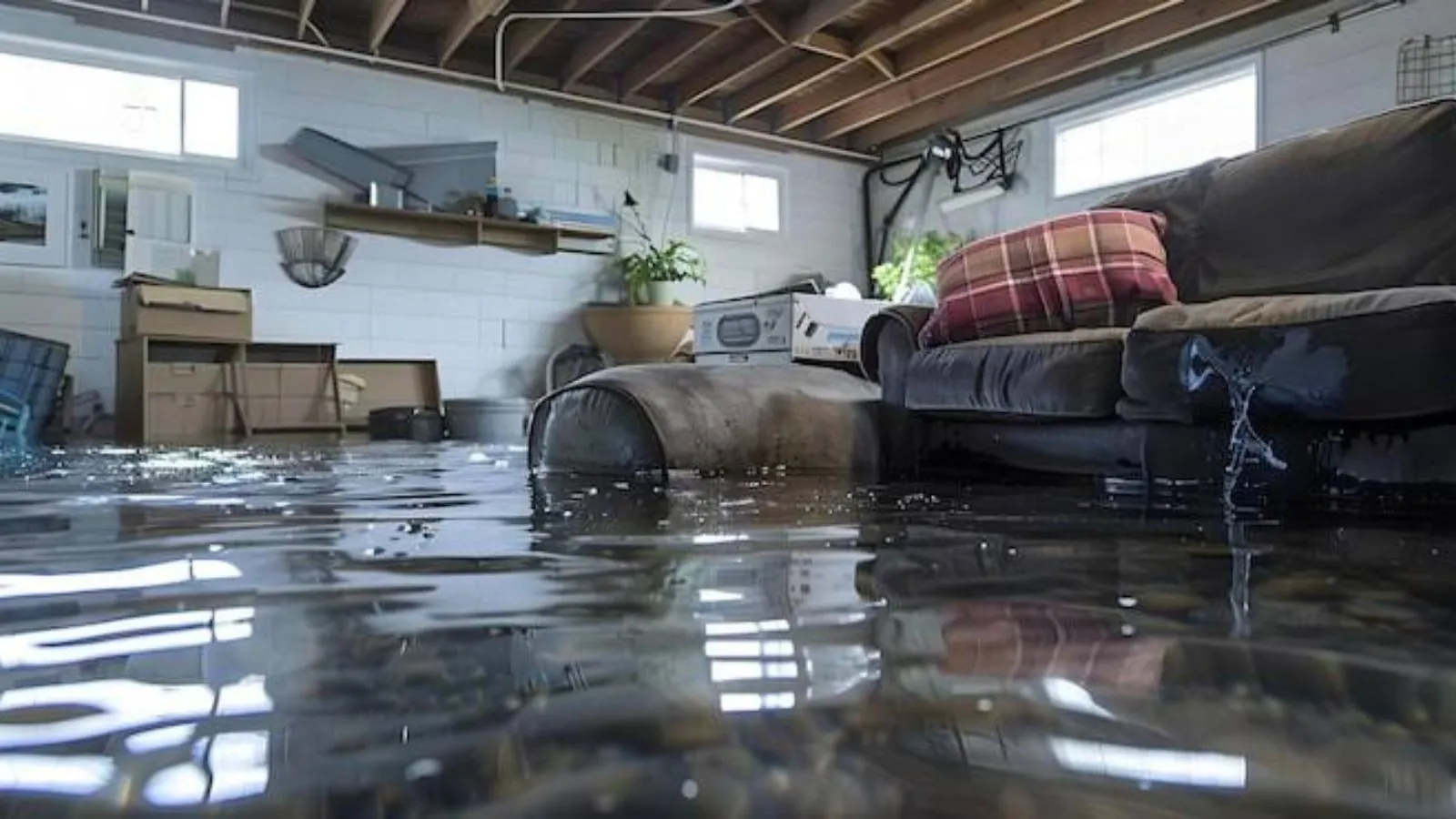
Rising water is an emergency, and the phone is answered 24/7. Flood damage cleanup in Oak Creek, WI covers water that entered from outside: a creek or river over its banks, surface runoff, or groundwater pushing in. Do not walk into a flooded level while the power is on. Keep children and pets out, and move to an upper floor if water is still rising.
Flood water is treated as Category 3 under the S500 standard, the most contaminated class. It has crossed lawns, streets and sewers before reaching your floor. That decides most of what follows.
Flood emergency: what to do first
- In order of importance
- People first. If water is rising, leave the lower level.
- Electricity: do not enter standing water where outlets, cords or the panel may be live. Call the electric utility to cut power at the meter if needed.
- Gas: if you smell it, leave and call the gas utility or 911.
- Do not pump a flooded basement empty while the ground outside is still saturated. Fast pumping can damage foundation walls.
- Photograph the water line on walls, furniture and appliances.
Where Oak Creek floods
Two waterways shape the risk. The Oak Creek stream drains about 26 square miles through the city to Lake Michigan, and the Root River runs along the southern edge. The flood mitigation plan prepared for the city by the Southeastern Wisconsin Regional Planning Commission lists flood events in 1986, 1997 and 2000.
That plan records flooded roads at Nicholson Road, East Ryan Road, East Puetz Road and East Forest Hill Avenue. It is a list of documented locations, not a prediction for any one house. If you live near one of those corridors, find out your property's flood zone from the city or the FEMA map service before you need to know.
The August 2025 storm showed how quickly it turns. Upstream of the city, the Root River gauge at Franklin reached 11.71 feet, its highest reading on record.
Why flood cleanup is different
With clean water, the goal is to dry materials in place. With flood water, porous materials that got wet are removed: carpet and pad, drywall up to above the water line, insulation, particleboard furniture. They cannot be cleaned reliably.
The sequence is pump, muck out, remove, clean, disinfect, then dry. Submersible pumps and extraction units take out the water. Crews in protective gear bag and remove ruined materials. Framing and concrete are washed and treated with an antimicrobial, then dried with air movers and LGR dehumidifiers.
Skipping straight to fans traps contamination in the structure. The removal step is what makes the building safe to rebuild. Our water extraction page explains the pumping stage in more detail.
After the water is gone
Drying is verified with a moisture meter, not by touch. Wood framing that feels dry can still be well above a normal reading. We log the numbers until they match unaffected wood in the house, as described under structural drying.
If the flood was in a lower level, most of the detail you need is on our basement water damage page. Rebuild follows once everything reads dry. We respond to flood calls across Oak Creek and in Franklin, where the Root River runs through the middle of the city.
What decides the cost of flood cleanup
| Cost factor | Why it matters on this job |
|---|---|
| Depth and area | Inches across one room, or feet across a whole level. |
| Contamination | All flood water is Category 3, so removal and disinfection are built in. |
| Materials removed | Drywall, insulation, flooring and built-ins that were below the water line. |
| Contents | Furniture and stored items to move, clean or dispose of. |
| Drying and rebuild | Equipment days, then framing, drywall and finishes. |
Flood damage usually needs separate flood coverage. Wisconsin's Office of the Commissioner of Insurance notes that a standard homeowners policy does not cover rising water, and that a National Flood Insurance Program policy normally has a 30 day wait before it takes effect. Ask your insurer what you have.
Want your real number? Call (833) 521-1033. We serve Oak Creek, Franklin, Greendale, Hales Corners, Franksville and Muskego. Work is done to the ANSI/IICRC S500 standard.