
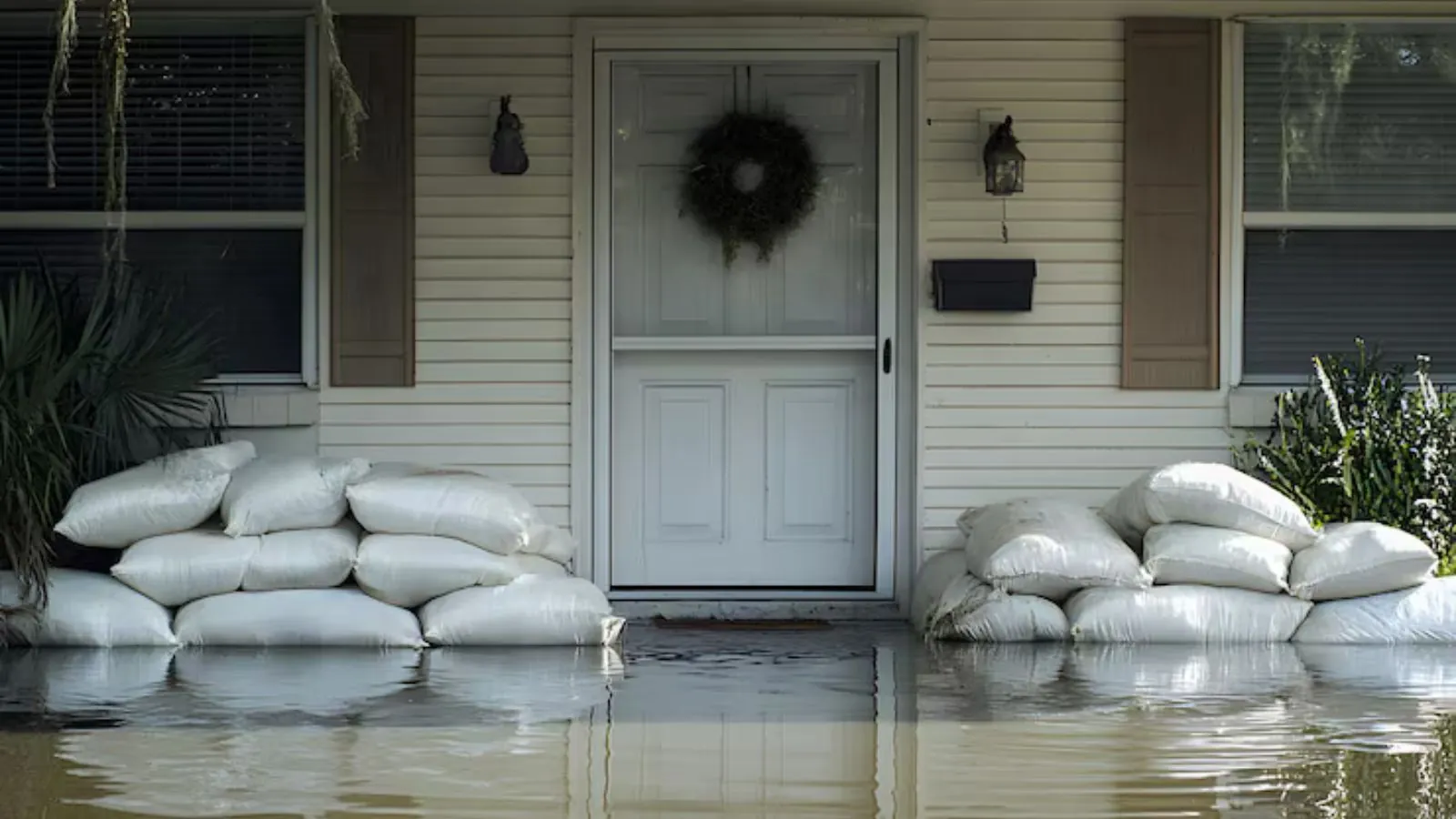
Storm damage is an emergency while rain is still coming in, and our line is answered 24/7. Storm water damage cleanup in Oak Creek, WI deals with rainwater that entered through the building envelope: a damaged roof, lifted siding, a broken window or a door that failed. If it is safe, move belongings away from the entry point, put buckets and towels down and stay off the roof and away from downed lines.
This page is about water driven in from above and the sides. Water that rose from the ground or a creek is a different job, covered under flood damage cleanup.
Storm emergency: before and after the rain stops
- Safety first
- Stay away from downed power lines and call the electric utility or 911 to report them.
- Do not climb on a wet or damaged roof. Tarping is a job for a roofer.
- Switch off power to wet rooms only from a dry panel.
- Photograph the damage outside and inside before moving debris.
- Open cabinets and closets on outside walls so you can see if water got in.
What recent storms did here
The storm of August 9 and 10, 2025 is the benchmark. The airport on Oak Creek's border recorded 5.74 inches in one day, and the Milwaukee Metropolitan Sewerage District measured between 4.17 and 14.55 inches across its service area. An earlier one, on July 22, 2010, dropped 5.61 inches at the same station.
Rain at that rate finds every weakness in a roof and every low window. If your home took water in either storm and was only mopped up, a moisture check of the attic and outside walls is worth doing before the next one.
Where storm water hides
Wind pushes rain sideways, so it enters where normal rain never does: behind siding, around window frames, through soffit vents and under lifted shingles. Inside, it soaks wall insulation from the top down. The wall can look fine while the cavity is wet.
We check attic insulation, the tops of outside walls and the areas under windows with a moisture meter and a thermal camera. Wet insulation is removed. Drywall is opened only where readings call for it, as described under wall and drywall repair.
Cleanup and drying
Standing water is removed with extraction units. Air movers and LGR dehumidifiers dry the framing, and readings are logged until the wood is back to normal. Rainwater that has passed through roofing and insulation is not clean, so affected surfaces are cleaned as part of the job.
The roof, siding and windows themselves are repaired by the relevant trades. We coordinate timing so the shell is closed before drying finishes. If a basement also took water during the storm, see basement water damage.
After large storms we work across Oak Creek and nearby towns, including Muskego.
What decides the cost of storm water damage
| Cost factor | Why it matters on this job |
|---|---|
| How water got in | A small flashing gap is minor. A section of missing roof is a large loss. |
| Rooms and levels | Attic only, or attic, upper rooms and walls below. |
| Insulation | Wet attic and wall insulation has to be removed and replaced. |
| Time before drying | Days of waiting after a regional storm raise the chance of mold. |
| Rebuild | Drywall, paint and flooring once the structure is dry. |
Wind and rain entering through storm damage is often covered, while rising flood water needs a separate flood policy. Wisconsin's insurance office suggests photographing everything and holding off on permanent repairs until your insurer agrees. Ask them about your policy.
Want your real number? Call (833) 521-1033. We serve Oak Creek, Franklin, Greendale, Hales Corners, Franksville and Muskego. Work is done to the ANSI/IICRC S500 standard.