
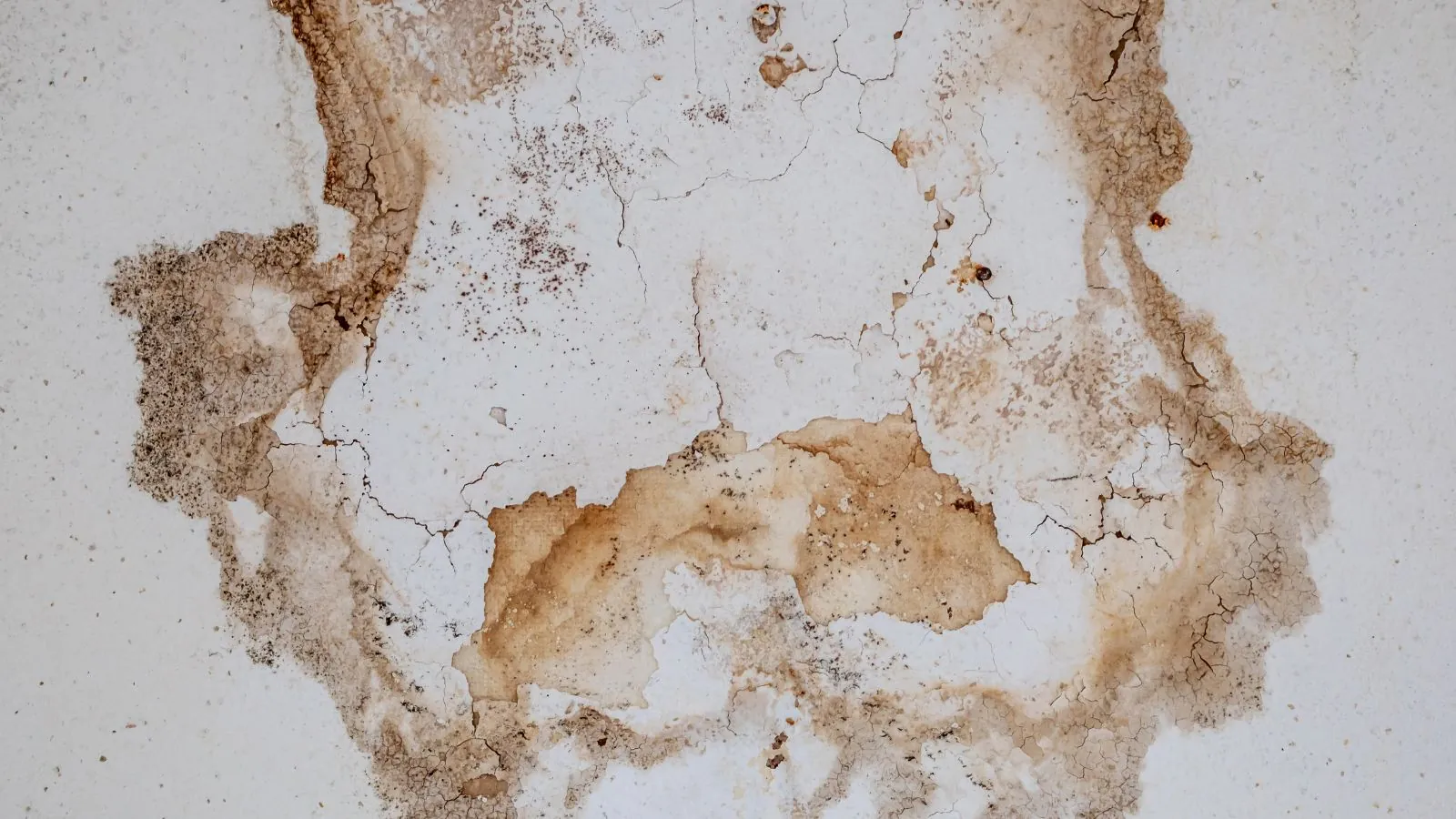
Wall and drywall water damage repair in Oak Creek, WI is the drying of wet wall cavities and the replacement of drywall, insulation and trim that cannot be saved. Drywall water damage shows as staining, bubbling paint, soft or crumbling board and baseboards that have swollen or pulled away.
Drywall is gypsum between two sheets of paper. It soaks up water from the bottom like a wick, so a half inch of water on the floor can wet the wall a foot high. The paper face is also what mold grows on first.
Signs a wall is wet inside
- What to look for
- Paint that bubbles, peels or shows a tide line.
- Baseboards that are swollen, stained or separating from the wall.
- Drywall that dents when pressed with a thumb.
- A musty smell near an outlet or along the floor.
- Stains that keep returning through new paint.
Both the EPA and Wisconsin's health department make the same point about that last one: do not paint or caulk over a moisture problem. Fix the water and dry the wall first.
Dry it or cut it out
Drywall that got wet with clean water and still feels firm can often be dried in place. Baseboards come off, small holes are drilled near the floor, and air movers push dry air through the cavity while a dehumidifier runs in the room.
It is cut out when it has gone soft, when the insulation behind it is soaked, when the water was contaminated or when it has been wet long enough to grow mold. The cut is made above the highest wet reading, usually in a straight line that makes the patch easy to finish.
The honest trade-off: drying in place avoids repair work but takes equipment time and only works early. Cutting out is quicker to dry and certain, but adds drywall, tape and paint. The meter readings decide, and we show them to you.
What is behind the drywall
Insulation is the hidden variable. Fiberglass batts slump when wet and hold water against the studs. They are removed and replaced. The wood studs and bottom plate are then dried and read with a pin meter.
Plaster walls, found in some older houses, behave differently. Plaster tolerates wetting better than drywall but dries slowly and can separate from its lath. It needs a gentler approach.
We also check the other side of the wall and the floor at its base. Wet wall bases often go with wet flooring, which is covered under carpet and hardwood floor repair.
Repair and finish
Once readings are normal, new insulation and drywall go in. Joints are taped and finished, the wall is primed and painted, and baseboards are replaced or reinstalled. Matching wall texture and paint sheen takes care, and a full-wall repaint usually blends better than a spot patch.
Where the water came from decides who else you need. A split line is covered on the burst pipe page. Persistent dampness with no leak may be a job for structural drying after the source is found.
We repair walls in homes across Oak Creek and in Hales Corners.
What decides the cost of wall and drywall repair
| Cost factor | Why it matters on this job |
|---|---|
| Dry or replace | Drying in place costs equipment time. Replacement adds materials and finishing. |
| Linear feet of wall | How many walls and how far along each the water travelled. |
| Insulation | Outside walls and some interior walls have insulation to replace. |
| Trim and finish | Baseboards, texture matching and the extent of painting. |
| Water category | Contaminated water means more removal and cleaning. |
Wall damage from a sudden leak is often covered. Damage from slow seepage over months is frequently excluded. Check your policy or ask your insurer. We photograph the wall before and after opening and record the readings.
Want your real number? Call (833) 521-1033. We serve Oak Creek, Franklin, Greendale, Hales Corners, Franksville and Muskego. Work is done to the ANSI/IICRC S500 standard.