
The short answer is that it depends on where the water came from. Homeowners insurance usually covers water damage that is sudden and accidental, and usually does not cover damage that built up slowly or water that rose from the ground. Everything else is detail, and the detail is in your policy.
We are a restoration company, not an insurance agency. This guide explains the general rules so you know what to ask. Your insurer or agent is the only one who can tell you what your policy covers.
The rule of thumb: top-down or bottom-up
Wisconsin's Office of the Commissioner of Insurance explains it with direction. Water that comes from the top down, such as a burst pipe or rain through a storm-damaged roof, is generally covered by a standard homeowners policy. Water that comes from the bottom up, such as an overflowing river or seepage through a foundation, is generally not.
It is a useful first test. Ask yourself whether the water fell, sprayed or leaked from inside the building, or whether it rose from outside. The first group is usually a homeowners question. The second is usually a flood insurance question.
What is usually covered, and what usually is not
| Situation | Typical treatment | Why |
|---|---|---|
| Supply pipe bursts and soaks a wall | Usually covered | Sudden and accidental |
| Water heater tank fails overnight | Damage usually covered, the heater itself usually not | The appliance is a maintenance item |
| Washing machine hose splits | Usually covered | Sudden and accidental |
| Slow drip under a sink for months | Often excluded | Gradual damage and lack of maintenance |
| Rain through a roof opened by wind | Usually covered | Storm created the opening |
| Rain through a worn-out roof | Often excluded | Wear and tear |
| Sewer or drain backs up | Not covered without an endorsement | Separate coverage in Wisconsin |
| Sump pump fails and basement fills | Not covered without an endorsement | Separate coverage in Wisconsin |
| River or surface water enters | Not covered by homeowners | Needs a flood policy |
General patterns only. Policies differ. Check yours or ask your insurer.
Sudden versus gradual
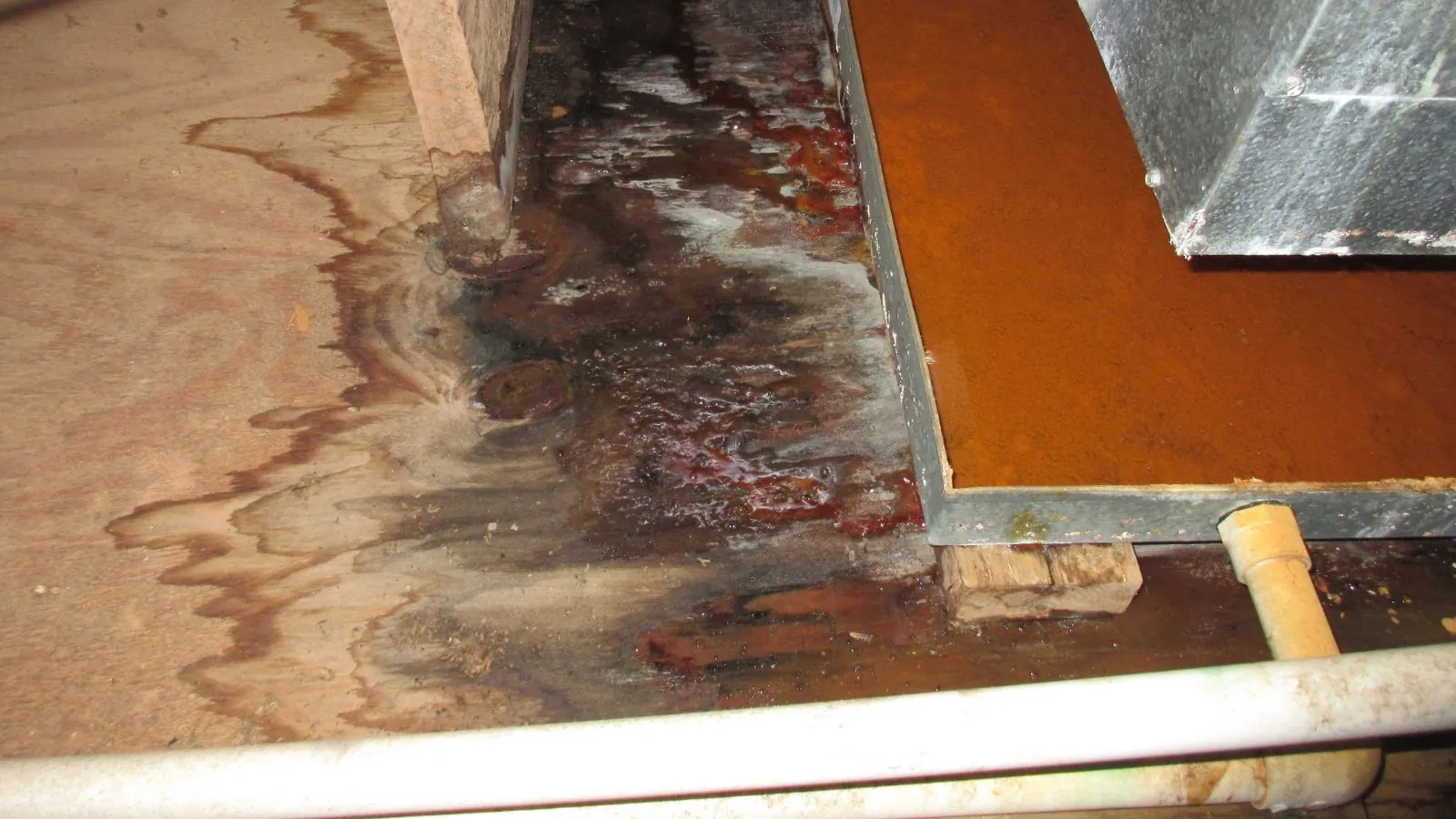
Most disputes come down to time. An insurer will often pay for a pipe that split yesterday and decline a leak that has plainly been running for a season. Adjusters look for signs: rot, layered stains, mold, corrosion on fittings.
This is one reason to act as soon as you find water. A leak reported and dried promptly looks like what it is. The same leak left for three weeks starts to look like neglect, and the damage really is worse.
If you find a stain and are not sure how old it is, a moisture reading helps. A wet reading means the leak is active or recent. Our wall and drywall page explains how readings are taken.
What this means in Oak Creek
Two parts of the state's guidance matter more here than in most places. First, the Office of the Commissioner of Insurance states that sewer backup and sump pump overflow are not covered by a standard policy and need a special endorsement. Oak Creek's wastewater flows to the regional Milwaukee Metropolitan Sewerage District system.
In the storm of August 9, 2025 the weather station on the city's border recorded 5.74 inches in a day. Regional sewers under that load are when backups happen.
Second, flood. The same office notes that a National Flood Insurance Program policy normally has a 30 day waiting period. The Oak Creek stream and the Root River have documented flood histories in the city's own mitigation plan. If you live near either, the time to ask about flood cover is a dry month.
Sources: Wisconsin Office of the Commissioner of Insurance consumer guidance, Wisconsin State Climatology Office, and the flood mitigation plan prepared for the City of Oak Creek.
Mold, and other fine print
Mold is its own topic. Many policies limit or exclude it, and where it is covered, it is usually only when a covered water loss caused it. That is another argument for drying quickly. The U.S. Environmental Protection Agency advises drying wet materials in the first 24 to 48 hours.
Other points worth reading in your policy: the deductible, whether personal belongings are covered at replacement cost or depreciated value, and whether there is cover for living elsewhere if the house cannot be used. If mold has already appeared, our mold remediation page explains the work.
What a restoration company can and cannot do
We can inspect, measure and document. That means dated photos of every affected room, moisture readings, a description of the source and an itemized scope of what needs to be done. Insurers ask for exactly those things.
We cannot tell you whether a loss is covered, promise that a claim will be paid or negotiate with your insurer. Be cautious of any contractor who says they can. Coverage is between you and your insurance company.
We document losses for homeowners in Oak Creek and nearby towns, including Franklin and Greendale. If the cause was a split line, the cleanup itself is described under burst pipe water damage.