
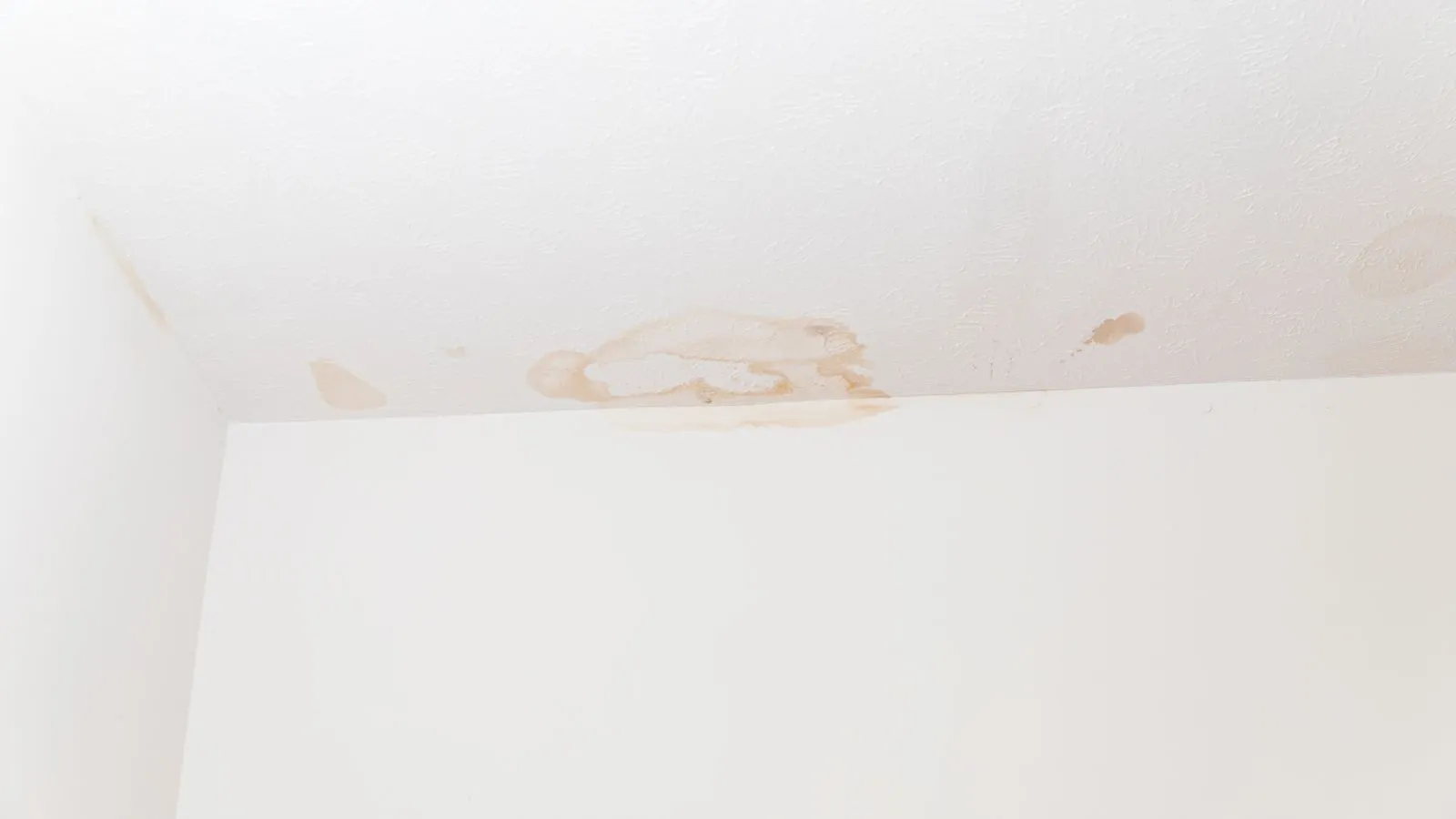
A pipe fitting drips, a patch of ceiling stains, a few boards cup. It looks like a few hundred dollars of repair. Do you call your insurer or just fix it?
There is no universal answer, and we are not insurance advisers. What we can do is lay out the considerations so you decide with full information. For anything about your own policy, ask your agent or insurer.
Start with what you do not know yet
The biggest mistake is deciding before you know the size of the damage. Small leaks are often not small. A stain the size of a dinner plate can sit under a square yard of wet insulation. A damp baseboard can mean a wall cavity wet for six feet in each direction.
So the first step is the same whichever way you go: find out how far the water went. A moisture meter and a thermal camera answer that in one visit. Only then do you have a repair figure to compare with anything.
The deductible arithmetic
Your deductible is the part of any claim you pay yourself. If the repair costs less than the deductible, there is nothing to claim. If it costs a little more, the insurer pays only the difference.
| Repair cost compared with deductible | What a claim would pay | Things to weigh |
|---|---|---|
| Below the deductible | Nothing | No reason to file |
| Slightly above | A small amount | Is that amount worth a claim on your record? |
| Well above | Most of the cost | This is what insurance is for |
| Unknown, damage may be hidden | Unknown | Get it measured first |
Look up your deductible before you need it. Some policies set it as a fixed amount and some as a percentage of the insured value.
Claims history
Insurers keep records of claims, and those records can be considered when a policy is priced or renewed. How much weight a single small water claim carries varies by company, and we cannot tell you what yours will do.
It is a fair question to put to your agent directly: how does your company treat a small water claim, and does it matter if no payment is made? Ask it as a general question. Also ask whether a call to discuss a possible loss is itself recorded as a claim.
Reasons to lean toward claiming
- Consider filing when
- Readings show the damage is much larger than it looks.
- More than one room or level is involved.
- Hardwood floors, cabinets or finished ceilings are affected.
- The water was not clean, so materials have to be removed.
- Mold is already present.
- A neighbor's unit or shared wall is involved.
Reasons to lean toward paying yourself
- Consider handling it yourself when
- The wet area is small and readings confirm it.
- The total is close to or under your deductible.
- The cause was gradual, which is often excluded anyway.
- It is a simple repair with no hidden cavities involved.
Either way, fix the source and dry the materials properly. An unclaimed leak that is left damp becomes a larger, later problem that may not be covered at all.
The Wisconsin and Oak Creek angle
Two points from Wisconsin's Office of the Commissioner of Insurance bear on small leaks. First, the general rule that water from the top down, such as a leaking pipe, is usually covered, while damage from below usually is not. A small leak from a supply line is the covered kind, if it is sudden.
Second, the office advises documenting any loss with photographs and a list, and not making permanent repairs until the insurer has agreed. Even if you plan to pay yourself, take the photos. If the damage turns out bigger than expected, you will want them.
A local tool helps with the sudden or gradual question. The Oak Creek Water and Sewer Utility describes a meter test: with every tap off, watch the small red dial on your water meter. If it moves, water is escaping. Checking it a few times a year catches slow leaks before they become the gradual damage insurers decline.
Sources: Wisconsin Office of the Commissioner of Insurance, City of Oak Creek Water and Sewer Utility customer guidance.
Do not let the decision delay the drying
Whatever you decide about the claim, the wet materials do not wait. The U.S. Environmental Protection Agency advises drying water-damaged areas in the first 24 to 48 hours to prevent mold. Stop the leak, photograph the damage and start drying. You can decide about the claim the next day with readings in hand.
Policies generally expect you to limit the damage in any case. Prompt drying helps you whichever way you go.
What an inspection gives you
A written scope with moisture readings turns a guess into a figure. With it you can compare the cost against your deductible, show your agent exactly what happened and make the decision calmly.
We inspect small leaks across Oak Creek and nearby towns, including Greendale and Muskego. Stained ceilings are explained under ceiling water damage repair, and wet wall bases under wall and drywall repair. We do not decide coverage or negotiate with insurers.