
Most water damage takes several days to dry with professional equipment, and much longer without it. The exact time depends on what got wet, how wet, and the air around it. Anyone who gives you a firm number over the phone is guessing.
What we can give you is the pattern: which materials are quick, which are slow and what a reasonable timeline looks like.
Rough ranges by material
| Material | With drying equipment | What slows it |
|---|---|---|
| Carpet and pad, clean water | A few days | Thick pad, concrete underneath |
| Drywall, wet at the base | Several days | Wet insulation behind it |
| Wood framing | Several days to a week | Closed cavities, cold walls |
| Plywood or OSB subfloor | About a week | Flooring left on top |
| Hardwood flooring | One to several weeks | Finish on top, wet subfloor below |
| Plaster | A week or more | Thickness, lath behind |
| Concrete slab | Weeks to fully release moisture | It is dense and holds a lot |
Typical experience, not a promise. The readings on your job decide.
Notice that the things you see first, carpet and paint, are the quick ones. The slow ones are underneath and inside.
What decides the time
Four things. How much water went in, which depends on how long the leak ran. How porous and thick the material is. How much air can reach it. And how dry and warm the surrounding air is.
Drying equipment works on the last two. Air movers push air across wet surfaces so moisture evaporates. Dehumidifiers pull that moisture out of the air so more can evaporate. Remove one and the other stalls.
Why it will not dry out by itself
People often wait a week to see if a wet wall dries naturally. Sometimes the surface does. The cavity behind it usually does not, because there is no airflow inside a closed wall and the insulation holds water against the wood.
Meanwhile the clock set by the U.S. Environmental Protection Agency is running. Its guidance is to dry water-damaged areas and items in the first 24 to 48 hours to prevent mold growth. Natural drying of a soaked wall takes weeks.
How Oak Creek's seasons change drying time
The same leak dries at different speeds in different months here. The climate normals for Milwaukee, measured at the airport that borders Oak Creek, show June as the wettest month and 34.57 inches of precipitation a year. Summer air is humid.
Humid air cannot take up much more moisture, so summer drying depends heavily on dehumidifiers. The EPA's indoor target is under 60 percent relative humidity, ideally 30 to 50. With windows open on a muggy day, a room can sit well above that and drying nearly stops.
Winter flips it. The average January low is 17.2 degrees. Heated indoor air is very dry, which speeds evaporation, but cold outside walls and unheated spaces slow it. A basement in February dries more slowly than an upstairs bedroom in the same house.
Sources: Wisconsin State Climatology Office climate normals, U.S. Environmental Protection Agency mold and moisture guidance.
How you know it is dry
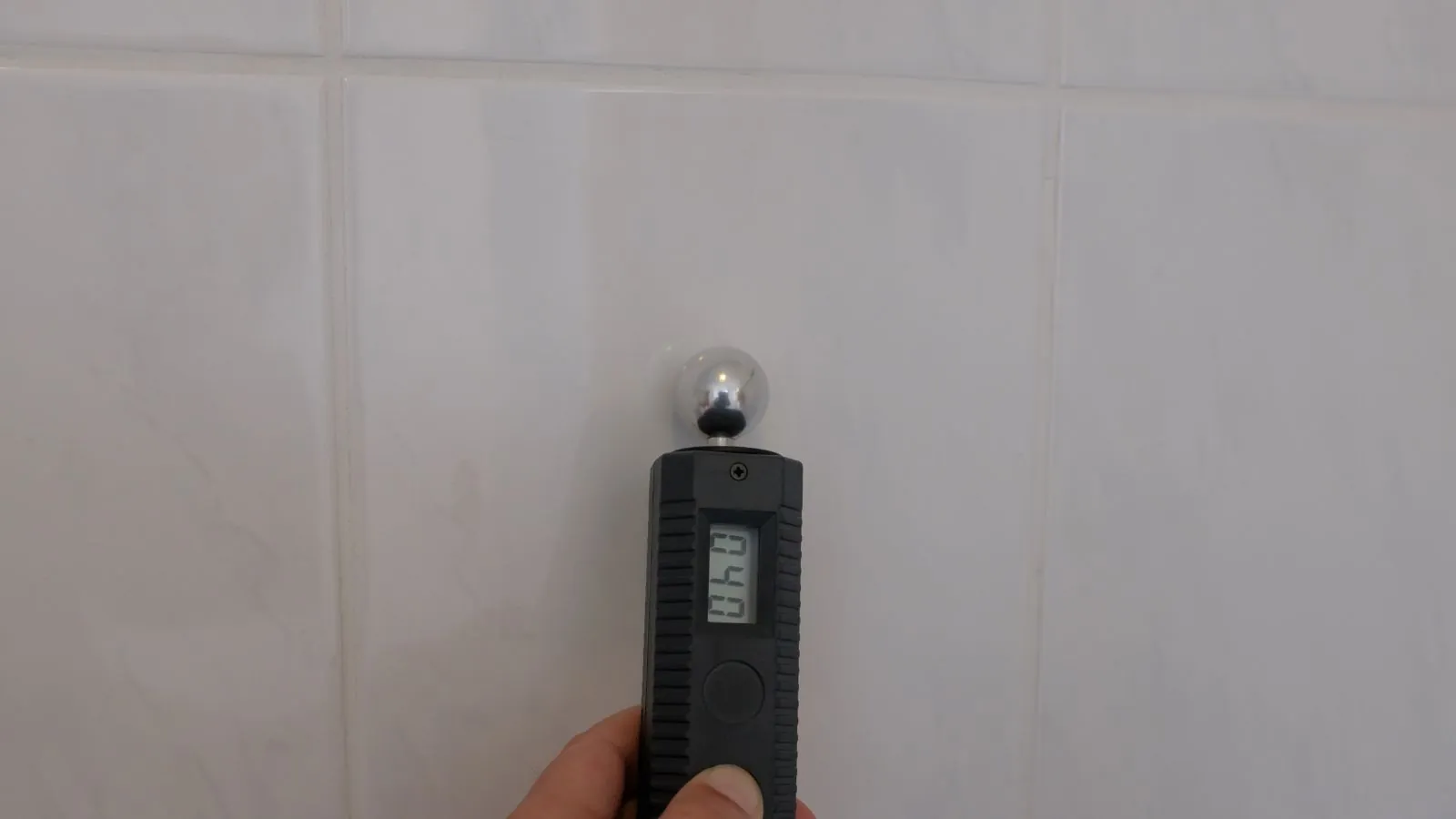
Not by touch, and not by the calendar. Materials feel dry at the surface long before they are dry inside. The test is a moisture meter.
On the first day, readings are taken in the wet materials and in the same materials somewhere unaffected in the house. The dry reading is the target. Drying is complete when the wet areas match it. This is the method in ANSI/IICRC S500, the industry standard, and it is why a proper job produces a log of numbers.
Ask for that log. It is also the record an insurer wants to see.
What you can do to help
- During professional drying
- Leave the equipment running. Turning it off at night can add days.
- Keep doors and windows in the drying area closed unless told otherwise.
- Keep the heating or cooling at a normal setting.
- Do not move equipment. Its position is planned.
- Tell the technician about any new damp spot or smell.
The equipment is loud and makes the room warm. That is normal. It is temporary.
When drying is not enough
Some materials are removed instead of dried, and doing so shortens the job. Soaked insulation, swollen particleboard, carpet pad wet with dirty water and anything touched by sewage come out. With them gone, air reaches the framing and the structure dries in days.
This is the trade-off in every drying plan. Removing more means more repair afterwards but quicker, more certain drying. Leaving more means less repair but more equipment time and a risk it does not work. Our wall and drywall repair and hardwood floor pages explain how that decision is made for each material.
What about rebuilding?
Repairs start once the readings say dry. Closing a wall, laying flooring or painting before then traps moisture. That is the cause of most problems that appear a month after a leak.
We dry and repair homes across Oak Creek and in nearby towns, including Greendale and Muskego.