
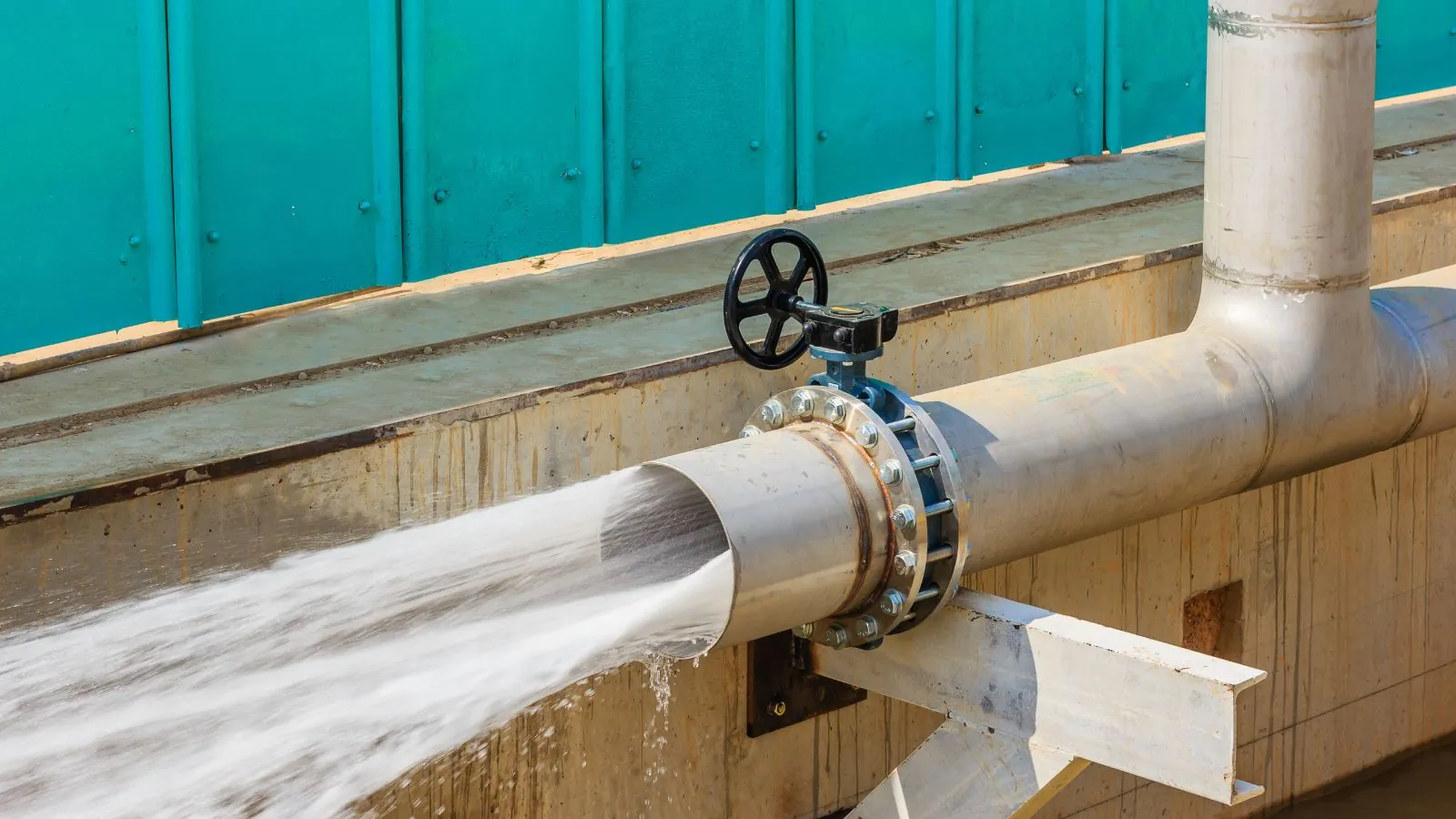
The main water shutoff is the valve that stops all water entering your house. Knowing where it is, and that it works, is the single most useful thing a homeowner can do to limit water damage. A supply line can release several gallons a minute. Every minute spent hunting for the valve is more water in the walls.
This is a practical guide. Do the walk-through today, before you need it.
Where to look
The main shutoff is almost always where the water service pipe comes into the building, close to the water meter. In a house with a basement, look on the wall that faces the street, low down, where a pipe comes through the foundation wall or up through the floor.
In a house without a basement, look in the utility room, near the water heater, in a closet on the street side or in the crawl space near the front. Condos and townhomes often have it in a utility closet or under the kitchen sink.
There are usually two valves, one on each side of the meter. Either will stop the water. The one on the house side of the meter is yours to use.
Two kinds of valve
| Type | How it looks | How to close it |
|---|---|---|
| Ball valve | A straight lever handle | Turn the lever a quarter turn so it sits across the pipe |
| Gate valve | A round wheel handle | Turn clockwise, several full turns, until it stops |
Ball valves are quick and reliable. Gate valves are common in older homes and can seize or fail to close fully if they have not been turned in years. Do not force a stuck one with a wrench. If it will not move by hand, have a plumber replace it.
Test it now
- A five minute drill
- Close the valve fully.
- Open a cold tap on the top floor and one on the bottom floor.
- The flow should slow and stop within a minute as the pipes drain.
- If water keeps running, the valve is not sealing. Book a plumber.
- Reopen the valve slowly, then close the taps once the air has spluttered out.
- Hang a tag on it and show everyone in the house.
Do the same for the small valves behind toilets, under sinks and behind the washing machine. In many leaks, closing one of those is enough.
Oak Creek: the meter test and who pays for leaked water
The Oak Creek Water and Sewer Utility is direct about responsibility. Its customer guidance states that you are responsible for all water that passes through the meter, whether it was used or leaked. A running toilet or a hidden leak shows up on the bill.
The utility also describes a simple test anyone can do. Turn off every tap and water-using appliance. Find the small red dial on the face of the meter. If it is turning, water is flowing somewhere. For a slow leak, mark its position and look again after 30 minutes.
For toilets, the utility suggests a few drops of food coloring in the tank. If color shows in the bowl after 15 minutes without flushing, the flapper is leaking. It lists water heaters, humidifiers, washing machines and dishwashers among the usual sources of household leaks.
Source: City of Oak Creek Water and Sewer Utility customer guidance.
If you are on a well
Most Oak Creek homes are on city water, but some nearby places are different. In Hales Corners, the village says homes may be supplied by a private well, a community well or city mains. With a private well, the quickest shut-off is the pump's switch or breaker, followed by the valve at the pressure tank.
If you are not sure which you have, look at your bills. No water bill usually means a well.
When the valve will not work
If the main valve is stuck, broken or under water, there is a second shutoff outside called the curb stop, in the ground near the street. It needs a special key and belongs to the utility's side of the system. Call the water utility and ask them to shut it. Do not dig for it yourself.
While you wait, switch off the water heater, open a tap on the bottom floor if you can reach it safely and move belongings away from the water.
After the water is off
Closing the valve stops the damage growing. It does not undo it. Water already in the walls, under the floor or in the ceiling below will stay there until it is extracted and dried, and it keeps soaking in the whole time.
Photograph the damage, then get the water out. Our water extraction page describes how standing water is removed, and burst pipe water damage covers what happens inside walls after a line splits. We respond across Oak Creek and nearby towns, including Franklin.
Going away?
For a trip of more than a few days, closing the main valve is cheap insurance. Leave the heat on in winter. Ask someone to check the house, because a closed valve does not help with a failed sump pump or a roof leak.