
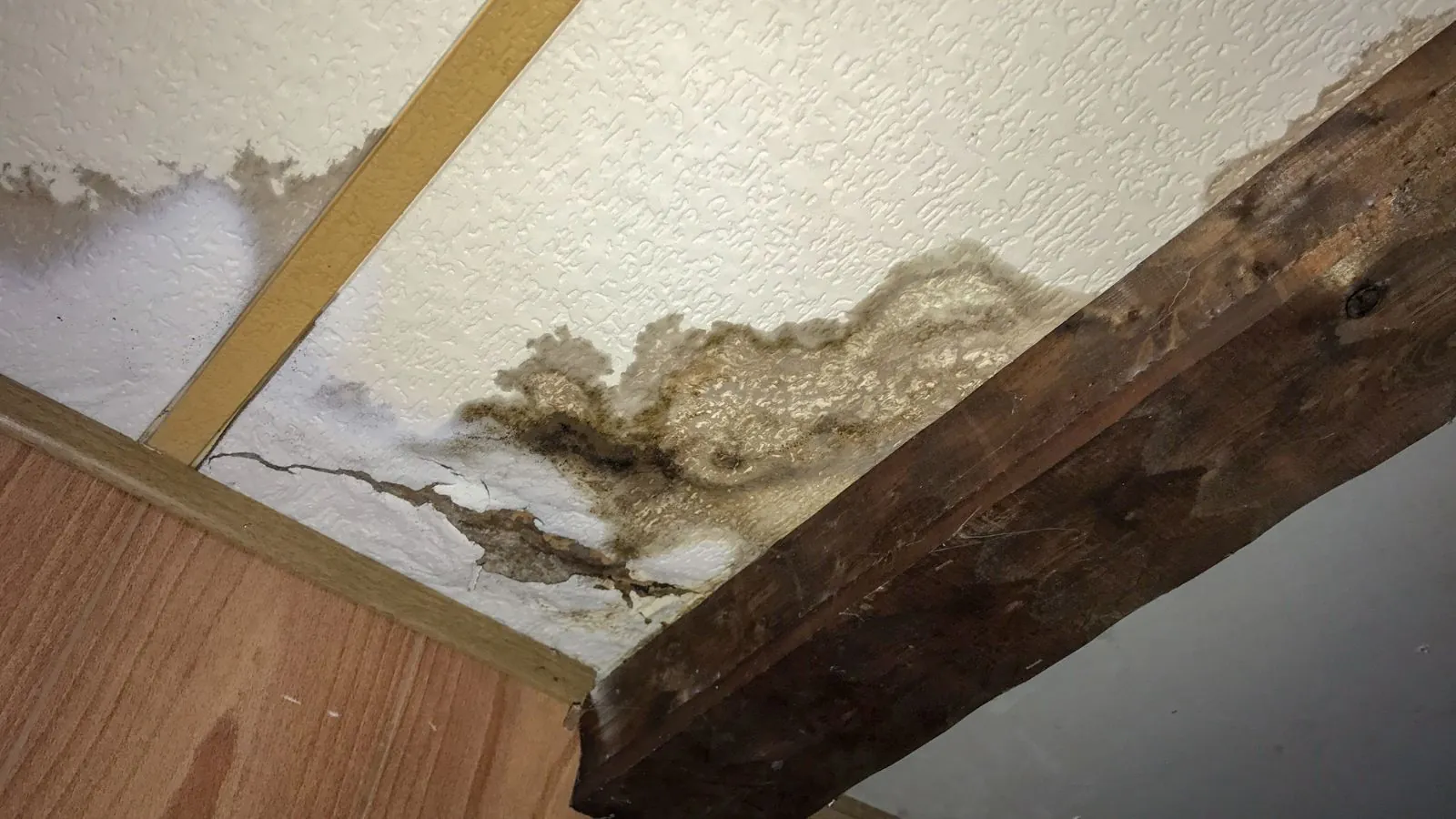
A water damage claim goes more smoothly when the file is complete from day one. The steps are not complicated, but the order matters, because some evidence disappears the moment cleanup starts.
This is a general guide written by a restoration company. It is not legal or insurance advice, and it does not say what your policy covers. For that, ask your insurer.
Step 1: make it safe and stop the water
Safety comes before paperwork. Close the main water valve if a pipe or appliance is the source. Switch off power to wet rooms only if you can reach the panel from a dry floor. Keep everyone out of water from a sewer or from outside.
Then stop it getting worse. Policies generally expect the owner to take reasonable steps to limit damage: moving belongings, mopping up, calling for extraction. Doing nothing while waiting for an adjuster can count against you.
Step 2: photograph before you move anything
- Capture these
- The source: the split pipe, the failed hose, the stained ceiling, the floor drain.
- Each affected room from the doorway, then closer.
- The water line on walls, furniture and appliances.
- Damaged belongings, with brand labels or serial plates where visible.
- A short video walking through the whole area, narrating the date and what you see.
Take more than you think you need. Photos taken before cleanup are the only record of how bad it was.
Step 3: notify your insurer promptly
Call your insurer or agent as soon as the situation is stable. Have your policy number, the date and time you found the damage, and a plain description of the cause. Ask three questions: what you are allowed to do before an adjuster visits, whether there are approved steps for emergency drying, and what they need from you in writing.
Write down the claim number, the name of everyone you speak to and the date. Keep it in one place.
Step 4: keep damaged items and receipts
Do not throw out damaged materials until your insurer says you can, unless they are a health hazard. If something has to go, such as sewage-soaked carpet, photograph it first and keep a sample if practical.
Keep receipts for everything: a wet vacuum from the hardware store, a hotel night, plumber's invoices. Make a list of damaged belongings with approximate age and what each would cost to replace.
Wisconsin's own advice, and an Oak Creek permit note
The Wisconsin Office of the Commissioner of Insurance gives three pieces of advice that match this list closely: photograph the damage, make a list of what was lost, and hold off on permanent repairs until your insurer has approved them. Emergency work to prevent further damage is a different matter and should not wait.
One local detail affects the repair stage. The City of Oak Creek requires a permit for foundation repairs, including drain tile work, through its Building Inspection Department. If your claim involves a wet basement and the fix includes foundation work, build the permit into your timeline and keep the paperwork with the claim file.
Sources: Wisconsin Office of the Commissioner of Insurance, City of Oak Creek licenses and permits pages.
Step 5: get the damage measured
An adjuster sees what is visible. Water damage is mostly not visible. Moisture readings show how far water travelled inside walls and under floors, and a drying log shows that equipment was needed for as long as it ran.
| Record | What it shows | Who produces it |
|---|---|---|
| Dated photos | Condition before, during and after | You and the restoration crew |
| Moisture map | Which materials were wet and how wet | Restoration technician |
| Drying log | Daily readings until dry | Restoration technician |
| Itemized scope | Each task and material, line by line | Restoration company |
| Cause statement | What failed and when | Plumber or other trade |
| Contents list | Belongings damaged or lost | You |
How readings are taken is explained on our structural drying page. If a ceiling was involved, see ceiling water damage repair for how the wet area is marked out.
Step 6: review the scope before repairs begin
Read the adjuster's estimate against the restoration scope line by line. If something is missing, such as insulation behind a wall that was opened, raise it with photos and readings. Differences are normal and are usually settled with evidence.
We provide documentation for homeowners in Oak Creek and nearby towns such as Hales Corners and Muskego. We do not negotiate claims or decide coverage.
Mistakes that weaken a claim
The common ones are simple. Cleaning up before taking photos. Throwing away damaged items. Waiting days to report. Starting permanent repairs before the insurer has seen the damage. Describing the cause loosely, for example calling a burst pipe a flood, which is a different kind of coverage.
Be accurate and specific. Say what failed, when you found it and what you did. That is all a good file needs.